
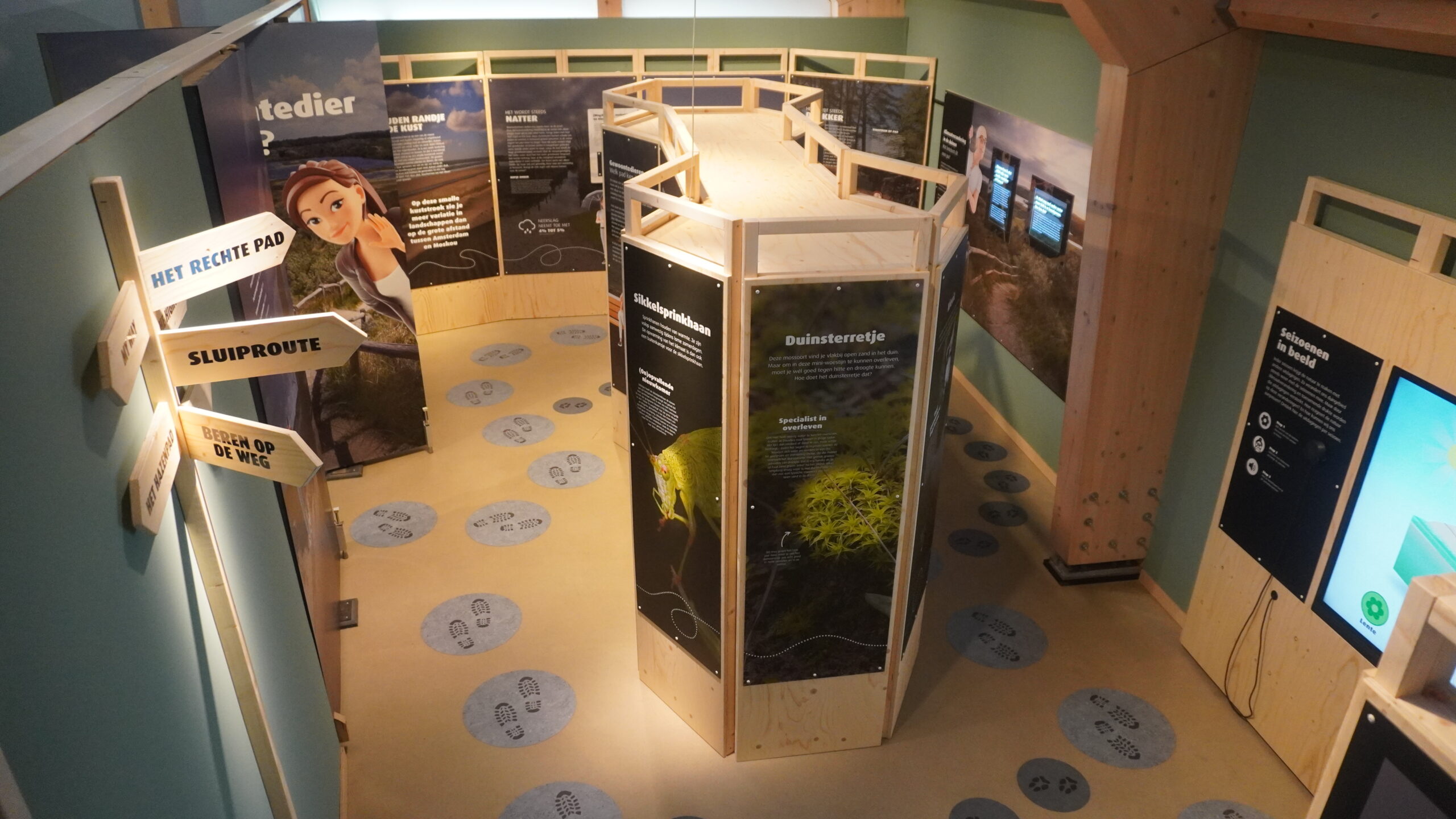
Nothing lasts forever, and some things are simply not meant to. Temporary exhibits change how museums communicate with their visitors. After spending most of 2025 working on temporary projects, the pattern became clear. Temporary exhibits support clearer stories, smarter budget decisions, and fewer long term commitments than permanent installations.
Temporary exhibits consistently offer:
- Clearer and more focused storytelling
- More deliberate use of limited resources
- Reduced long term operational risk
These outcomes are not incidental. They result directly from how temporary projects are planned, designed, and executed.
The limits of permanent exhibits
The longevity of permanent exhibits creates immediate constraints. Content must remain accurate far into the future, which often leads to cautious and generic messaging. Visual design and hardware are selected for durability rather than adaptability. Over time, this results in exhibits that feel dated while still occupying valuable floor space.
Permanent exhibits introduce recurring challenges:
- Messaging is written to avoid change rather than address it
- Hardware prioritises robustness over flexibility
- Visual language ages while the exhibit remains fixed
During museum visits, we frequently encounter broken interactives marked with out of order signs, outdated graphics, or screens that no longer function. Maintenance is rarely planned in detail or properly budgeted. Original suppliers of interactive applications may no longer exist, and custom software becomes impossible to update. The exhibit remains, but its message stops working. How effective is an exhibit that cannot be repaired or refreshed?
Flexibility and relevance of temporary exhibits
Temporary exhibits allow museums to respond to current topics and changing audiences. Messaging can be direct and timely. Visual language can be more contemporary because the lifespan is limited to six, twelve, or at most twenty four months. This reduces institutional risk and lowers the threshold for approval.
Because the commitment is shorter, museums gain room to experiment:
- New narrative structures can be tested
- Experimental layouts become acceptable
- Unfamiliar or urgent topics can be addressed
If an approach proves effective, it can inform future projects. If not, the exhibit ends without long lasting consequences. This feedback loop is difficult to achieve with permanent installations.
Budget as a design tool for temporary exhibits
Temporary exhibits usually come with tighter budgets. Rather than lowering quality, this constraint improves decision making. Teams are forced to identify what truly matters to the story. Non essential elements are removed early in the process, and resources are spent where they directly support the visitor experience.
Tighter budgets create clarity:
- Core messages are defined earlier
- Decorative choices are questioned
- Production decisions become purposeful
Large budgets often slow projects down. Materials and technologies are selected because they appear premium, not because they add value. Decision making becomes fragmented, and focus drifts. With temporary exhibits, every component must justify its presence.
Responsible production
Another advantage lies in how temporary exhibits are designed and built. We prioritise structures that can be disassembled, reused, or recycled after closing. Components are intended for future use rather than disposal. This reduces waste and prevents storage spaces or landfills from filling up with single use materials.
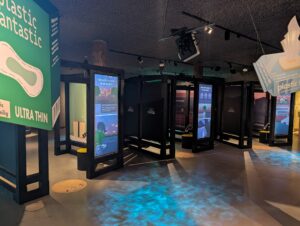
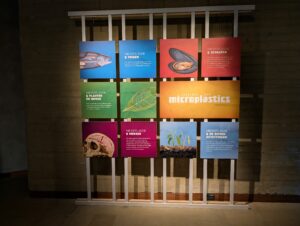
For a recent project at De Bastei in Nijmegen on how microplastics enter river ecosystems, these choices were deliberate. In practice, this meant:
- Cardboard prints for information panels
- Wooden structures designed for reuse
- Projectors for storytelling instead of single use screens
The goal was to minimise plastic waste, which was especially relevant for an exhibition addressing the environmental impact of plastic pollution.
Temporary exhibits show that shorter lifespans do not result in lower quality. They support relevance, clarity, and responsible use of resources. For many museums, they provide a practical way to communicate with audiences in the present.